

Quick Summary
A child safe finish is the outer layer a baby can touch, lick or bite, so choose one that seals the wood without fumes or peeling. Water-based coatings usually have lower odour, while shellac, beeswax and food-grade mineral oil each suit different pieces. Always check the label for a named safety standard and let the piece cure fully before it goes in the nursery.
- Water-based coatings are usually lower in odour and dry faster, which suits indoor use.
- A low-VOC label describes emissions during curing, not whether the cured finish is safe to chew.
- Toy-safe is the most specific claim and should point to a named standard or test.
- Curing continues for days or weeks after a piece feels dry, so allow the full cure time before placing it.
- Apply thin coats in a ventilated space away from the nursery, and keep the nursery aired after placement.
Table of Contents
- Why the Finish Matters on Nursery Wood Decor
- Non-Toxic Wood Finish for Nursery Decor: The Main Options Compared
- Low-VOC Finish for Painted Wood: What the Label Really Means
- Checking Labels for Safety Certifications
- How Long Wood Finish Takes to Cure Before It Goes in the Nursery
- Step-by-Step: Finishing Nursery Wood Decor Safely
- Custom Baby Name Sign Finish: What to Ask Before You Order
- Frequently Asked Questions
Why the Finish Matters on Nursery Wood Decor
Choosing a child safe finish for wood nursery decor is a bigger decision than most parents expect. Babies and toddlers touch everything, and they often chew on it.
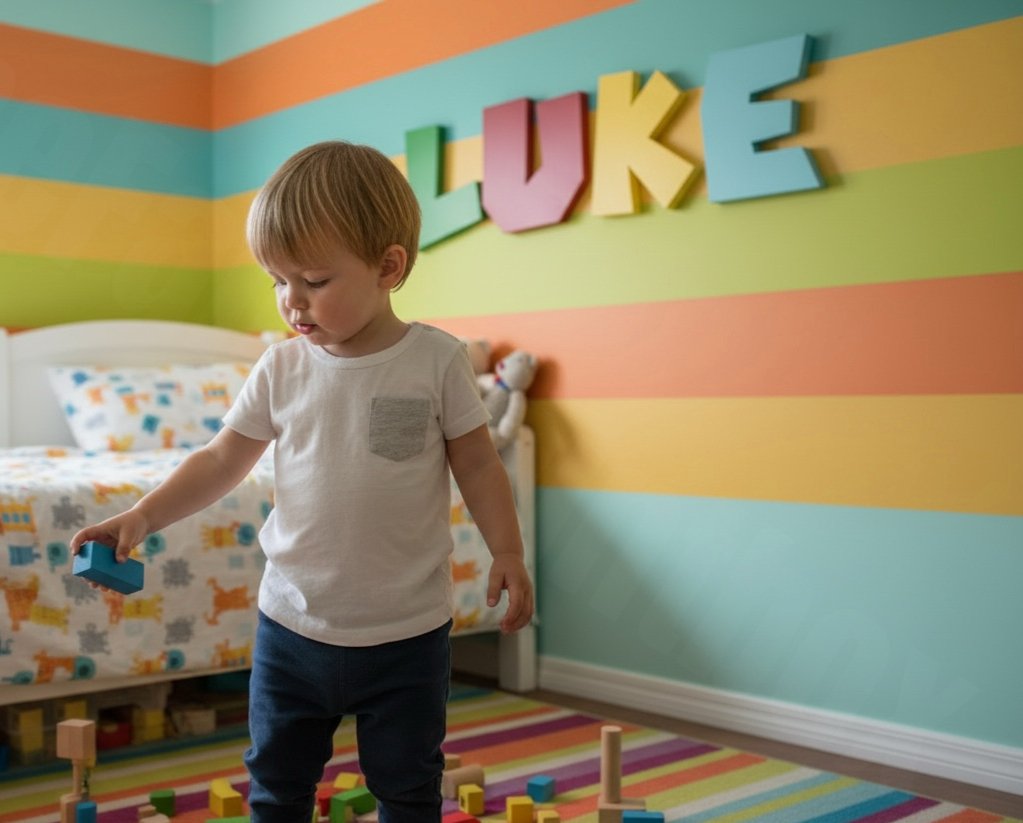
The child safe finish is the layer your child can actually touch, lick or bite. It seals the wood, changes how it looks and decides how well it holds up to wiping. A poor choice can leave a surface that peels, cracks or releases fumes into a room where the baby sleeps.
Here is how to think about picking a finish that suits the room and the child.
Non-Toxic Wood Finish for Nursery Decor: The Main Options Compared
Several finish types are common for wood items in a nursery. Each has trade-offs, so the right one depends on the piece and how much contact it will get.
Shellac, Beeswax and Food-Grade Mineral Oil
Pros and cons at a glance:
- Shellac: hard finish, good for items handled often; can chip if knocked
- Beeswax: gentle and natural feel; less durable, needs reapplying
- Mineral oil: easy and clean-looking; offers limited water protection
Water-Based and Oil-Based Coatings
Water-based coatings are usually lower in odour and dry faster, which makes them easier to use indoors. Oil-based coatings often give a tougher, more durable surface but can smell strong while they cure. Many parents prefer water-based products for a nursery, though you should always check the product label for its exact contents and safety information.
The main finish types differ in how they feel, how they hold up, and how much care they need.
| Finish | Best for | Key difference |
|---|---|---|
| Shellac | Items handled often | Hard finish; can chip if knocked |
| Beeswax | Gentle, natural feel | Less durable; needs reapplying |
| Food-grade mineral oil | Easy, clean-looking finish | Limited water protection |
| Water-based coating | Indoor use | Lower odour; dries faster |
| Oil-based coating | Tougher, durable surface | Can smell strong while curing |
Low-VOC Finish for Painted Wood: What the Label Really Means
A low-VOC label means the product releases fewer volatile organic compounds into the air than a conventional equivalent. Those compounds are what you smell while a fresh coat dries, and they are the reason a newly finished piece needs ventilation. But "low-VOC" is a relative claim, not a safety guarantee, and it is routinely confused with three other labels that mean different things.
Here is what each label claim does and does not establish:
- Low-VOC or zero-VOC describes emissions during application and curing. It says nothing about whether the cured film is safe to mouth, and it does not cover every ingredient in the can. A product can be low-VOC and still contain a biocide or additive you would not want a teething child to chew.
- Non-toxic is a marketing term in most consumer contexts. It has no single legal definition for finishes, so treat it as a starting point for questions rather than proof of suitability.
- Food-safe usually means the cured finish is acceptable for indirect contact with food, such as a bowl or spoon. It does not automatically mean the finish is suitable for a toy a child will gnaw, because toys face saliva, repeated impact and abrasion that a bowl does not.
- Toy-safe is the most specific claim and the one most worth verifying. It should point to a named standard or test, not just an adjective on the front of the tin.
A product can be low in VOCs and still not be suitable for items a child will mouth. Read the full label, including the small print and any safety data sheet the maker publishes, and do not rely on the front of the tin alone.
Always check whether the painted item is meant for toys, furniture or decor only. A finish that suits a wall letter may not suit a teething toy, and a maker who understands the difference will say so plainly when asked.
A label that says "eco" or "natural" without naming an ingredient list or a standard is not a safety claim at all.
Checking Labels for Safety Certifications
Before you buy, look at the label for clear information:
- The product name and intended use (decor, toy, furniture)
- A list of ingredients or a safety data sheet you can look up
- Any independent safety certification named on the label
- Curing time and ventilation instructions
- Whether the product is recommended for items a child may chew
If a claim is vague or the certification is not named, ask the seller or manufacturer directly before buying.
How Long Wood Finish Takes to Cure Before It Goes in the Nursery
Drying and curing are different processes, and the difference matters more in a nursery than almost anywhere else. Drying is the solvent or water leaving the film, which is why a piece can feel dry to the touch within hours. Curing is the chemical cross-linking that turns that film into a hard, stable surface, and it continues for days or weeks after the piece feels finished. During that window the finish is still releasing vapours, and the film is still soft enough to pick up fingerprints, dust and impressions.
A practical sequence most finishers follow:
- Dry in a ventilated space away from the nursery. A garage, shed or spare room with a window open is better than the room where the baby sleeps. Keep the nursery door closed and do not run a fan that pushes air from the finishing area into the rest of the home.
- Wait for the label cure time, then add a margin. Manufacturers publish a full-cure window, often expressed in days rather than hours. Treat that number as a minimum, not a target, and add extra time in cool or humid conditions, which slow curing.
- Smell-test before the piece goes back in. Bring the item into a well-ventilated room and smell it up close. A faint, fading odour is normal early on; a strong solvent smell means it is not ready. This is a rough check, not a measurement, but it catches the obvious cases.
- Place it, then ventilate the room. Once the piece is on the wall or near the crib, air the nursery daily for the first week and keep the door open when the baby is not sleeping in it.
- Watch the surface for the first month. A finish that still marks under a fingernail press or feels tacky in warm weather has not fully cured, and it should come back out of the nursery until it does.
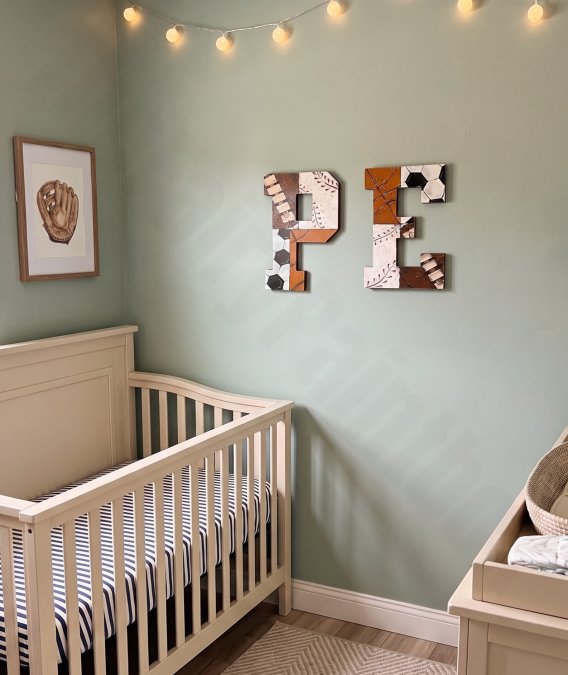
Ventilation is the part most parents underestimate. Off-gassing continues after the piece is in place, so a freshly finished letter mounted above a crib in a closed room is the worst-case placement. If you cannot ventilate the nursery well, finish the piece earlier and let it cure elsewhere for longer.
Watch out: a finish that smells strongly after the stated cure time may have been applied too thickly or in conditions outside the label's range, and thin coats applied in a warm, ventilated space cure far more reliably than one heavy coat.
Step-by-Step: Finishing Nursery Wood Decor Safely
- Prepare the wood. Sand the surface smooth and wipe away all dust.
- Choose your finish based on the label and the item's use.
- Work in a ventilated space with windows open and the nursery closed off.
- Apply thin coats. Thin coats dry more evenly and cure more fully than one thick coat.
- Let each coat dry as the label directs before adding the next.
- Allow full curing before the piece goes in the nursery.
- Wipe down the finished piece with a soft, damp cloth as needed.
Wear gloves and keep finishing supplies stored out of reach of children and pets.
Custom Baby Name Sign Finish: What to Ask Before You Order
If you are ordering a custom piece, ask the maker a few clear questions before you buy:
If you have a question about a specific piece, reach out to us before you order.
Frequently Asked Questions
What finish is safe for wooden nursery decor?
Finishes commonly chosen for items a baby may handle include shellac, beeswax and food-grade mineral oil, though each has trade-offs in durability and look. Water-based, low-VOC products are often preferred for painted pieces because they release fewer volatile organic compounds during application. No finish is safe simply because it is labelled natural, so check the product's documentation and the manufacturer's guidance on curing before the piece goes into a nursery. Choose based on how the item will be used, whether it will be chewed or only looked at, and how easily the surface can be cleaned.
How long should a wood finish cure before bringing decor into a nursery?
Curing time varies by product, so follow the drying and curing times printed on the label rather than relying on touch-dry times. Surface-dry does not mean fully cured, and a finish can still release odour and compounds for longer after it feels dry. Ventilate the room during application and for the full recommended curing period, then air the piece before placing it in the nursery. If you are unsure, ask the maker or manufacturer how long their finish needs and whether it is intended for items a baby may touch.
How can I tell whether a wood finish is child-safe?
Look for explicit information on the label or product sheet rather than marketing words such as natural or eco-friendly, which are not standards. Check whether the product states low-VOC or zero-VOC content, lists its base ingredients and gives clear curing instructions. Some finishes carry toy-safety or food-contact declarations, but these apply to specific products and conditions, so confirm what the claim covers. Where a claim is vague or missing, ask the seller for the product data sheet before you buy or use it.
What should I ask a maker about the finish on a custom baby name sign?
Ask which finish was used and how the piece was sealed. If the sign will be chewed or handled often, ask whether the finish is intended for that use. For unfinished pieces you will paint or stain yourself, ask what the maker recommends for sanding and sealing so your finish choice matches the wood.
