


Table of Contents
- Start with Your Nursery Wall Art Vision
- Creating a Nursery Gallery Wall Layout
- How to Hang Nursery Wall Art Safely and Securely
- Nursery Wall Art for Girls: Design Ideas and Inspiration
- Incorporating a Baby Name Wall Sign as Your Focal Point
- Balancing Art, Wallpaper, and Accent Walls
- Adapting Your Nursery Art as Your Child Grows
- Common Mistakes to Avoid When Styling Nursery Walls
- Frequently Asked Questions
Last Updated: October 10, 2026
Start with Your Nursery Wall Art Vision
Before you hang a single frame, imagine what your nursery will feel like. The best nurseries start with a clear vision. At TheFairyPaintBox, we help parents build personalized spaces that grow with their children by defining your theme and understanding your room.
Define your theme and color palette
Your theme is the foundation for all your nursery wall art decisions, giving your space direction and making every piece feel intentional.
Common themes include:
- Nature and animals (forest creatures, ocean life, birds)
- Celestial (planets, stars, moons, space exploration)
- Whimsical and dreamy (clouds, rainbows, hot air balloons)
- Modern geometric (shapes, patterns, abstract designs)
- Storybook and literary themes
Once you pick a theme, your color palette follows naturally. Soft pastels create calming spaces, bold colors add energy, and neutral backgrounds with colorful accents offer flexibility as your child grows.
Stick to a base of two to three colors, then add accent colors sparingly to create visual impact without overwhelming the space.
Assess your room size and wall space
Measure your walls and note where windows, doors, and furniture sit, as these fixed elements determine where you can place art.
Small nurseries benefit from one large focal point, vertical arrangements, and negative space. Larger rooms can handle multiple gallery walls and bigger pieces. Don't fill every inch, negative space makes your art breathe and prevents clutter.
Creating a Nursery Gallery Wall Layout
A gallery wall transforms a plain wall into a focal point. Strategic arrangement creates visual balance; random placement looks chaotic.
Plan your gallery wall on paper first
Most people skip this step, but it's the difference between an intentional and accidental gallery wall. Sketch your arrangement at scale, it takes 15 minutes and saves hours of rearranging.
Use this planning table to organize your gallery wall pieces:
| Piece Number | Size | Type | Placement Height | Spacing from Next |
|---|---|---|---|---|
| 1 | 16x20 | Poster print | 52-56 inches | 3 inches |
| 2 | 8x10 | Framed art | 54-58 inches | 2.5 inches |
| 3 | 11x14 | 50-54 inches | 3 inches | |
| 4 | Custom name sign | Varies | 48-52 inches | 2 inches |
Choose frame styles and spacing
Matching frames create cohesion; mixing too many styles creates visual noise. Popular choices include white or natural wood frames for modern looks, painted wood frames matching your theme, or frameless prints for minimalism.

Keep spacing consistent at 2-3 inches between frames. Placing pieces too close creates a cramped feeling; your artwork needs room to breathe.
How to Hang Nursery Wall Art Safely and Securely
Proper installation prevents accidents and protects your walls.
Select appropriate hanging hardware
Know your wall type: drywall needs anchors or studs; plaster needs plaster anchors; brick needs concrete anchors. Choose hardware rated for at least double your artwork's weight, never hang heavy pieces on drywall anchors alone.
Install at the correct height and spacing
Center your gallery wall at 50-55 inches from the floor for nursery visibility. Measure twice, mark once, and use a level. Measure spacing from the center of one piece to the next, keeping 2-3 inches between pieces. Use studs for heavy pieces and quality drywall anchors for lighter ones.
Nursery Wall Art for Girls: Design Ideas and Inspiration
Creating a beautiful space for a girl's nursery means thinking beyond pink. Modern nurseries for girls embrace bold colors, interesting patterns, and artwork that inspires imagination.
Soft color palettes and whimsical themes
Soft pastels create a calming foundation. Blush pink, sage green, soft yellow, and light lavender work beautifully together. These colors soothe without feeling babyish.
Whimsical themes that work beautifully include:
- Enchanted forests with woodland creatures
- Dreamy skies with clouds and rainbows
- Garden themes with flowers and butterflies
- Fairy tale inspiration with castles and magical elements
- Celestial designs with stars and moons
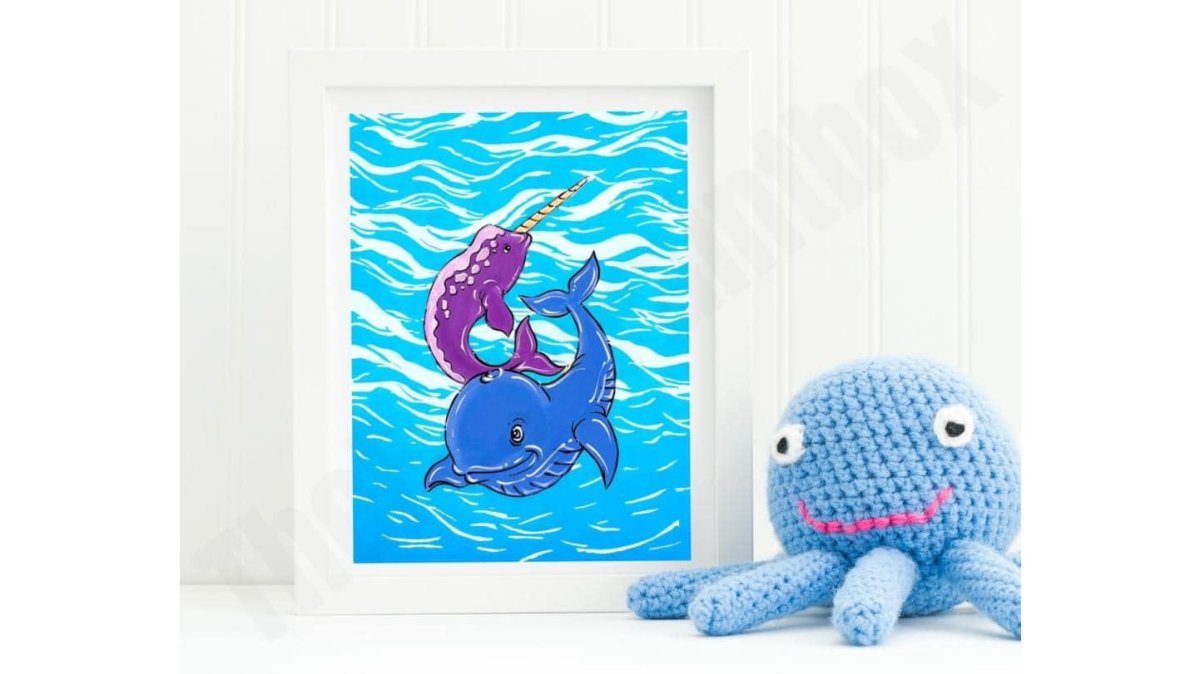
The Playful Ocean Blue Whale & Narwhal Nursery Room Poster Print brings underwater wonder to a girl's room with vibrant blues and playful characters. Available in 8 x 10 inch, 11 x 14 inch and 16 x 20 inch (horizontal orientation), it works as a standalone focal point or as part of a larger gallery wall arrangement.
Pair soft colors with meaningful artwork. A custom baby name sign becomes the centerpiece of the room. The Cloud-Shaped Baby Name Wood Nursery Room Sign offers handcrafted lettering in soft white or custom colors, creating a gentle focal point that celebrates your daughter's arrival.
Animal and nature artwork options
Animals and nature create visual interest while remaining timeless. A girl's nursery can feature:
- Forest animals (deer, foxes, owls, rabbits)
- Ocean creatures (whales, dolphins, starfish)
- Birds (cardinals, blue jays, hummingbirds)
- Garden insects (butterflies, ladybugs, bees)
- Nature scenes (trees, flowers, mountains)
The ABC Ocean Animals Nursery Room Poster Print combines education with beauty. This colorful alphabet poster features ocean creatures from A to Z, teaching letters while adding visual depth to your wall arrangement.

Nature artwork doesn't need to be realistic. Illustrated, painted, or graphic interpretations often work better in nurseries. They feel more playful and less like a science classroom.
Incorporating a Baby Name Wall Sign as Your Focal Point
A personalized baby name sign transforms a nursery from generic to distinctly yours. It's the one piece that says "this room belongs to this specific child." Your baby's name deserves to be displayed beautifully.
A custom name sign serves multiple purposes. It's a focal point that draws the eye. It's a keepsake your child will treasure. It's a gift-worthy piece that guests notice immediately. Most importantly, it makes the room feel complete and intentional.
Handcrafted wood letters create warmth and character. Each letter is individually painted, allowing for custom colors that match your theme perfectly. The Cloud-Shaped Baby Name Wood Nursery Room Sign, for example, features sturdy 1/2-inch thick wood construction with included hanging hardware for easy installation.

Position your name sign at the center of your gallery wall or as a standalone statement above the crib. Make it the anchor point that everything else revolves around.
Playful Ocean Blue Whale & Narwhal Nursery Room Poster Print →
Custom pieces take time. Our Painted Wood Letters are manufactured and shipped in a three to four-week timeline. Plan accordingly if you have a specific timeline. The wait is worth it when you see the finished product on your nursery wall.
Balancing Art, Wallpaper, and Accent Walls
Mixing different types of wall decor requires restraint. Too many competing elements create chaos. Strategic balance creates visual interest without overwhelming the space.
Mixing prints with solid walls and murals
A gallery wall of prints works best on a solid wall. Adding wallpaper behind your gallery wall creates too much visual competition. Your eye doesn't know where to focus.
Instead, choose one approach per wall:
- Wall 1: Solid color with gallery wall of prints
- Wall 2: Wallpaper with minimal additional decor
- Wall 3: Accent wall (bold color or mural) with no other artwork
- Wall 4: Solid color, possibly with a single large piece
Wallpaper adds pattern and personality without requiring installation of multiple pieces. Graphic wallpaper with animals, rainbows, or nature themes works beautifully in nurseries. Choose wallpaper that complements (not matches) your gallery wall prints.
A mural creates a dramatic focal point. Whether painted freehand or applied as a wall decal, murals work best on one wall only. Let the mural stand alone. Don't add prints directly over or next to it.
Creating visual impact without clutter
Visual impact comes from intentional choices, not quantity. A single large piece often creates more impact than six small ones.
Consider these layering approaches:
- One large focal point artwork + smaller supporting pieces
- Bold wallpaper + minimal additional decor
- Custom name sign + coordinating gallery wall
- Accent wall + simple framed prints on adjacent walls
Negative space (blank wall) is not wasted space. It's essential breathing room that makes your artwork stand out. A common mistake is trying to fill every inch of wall. Restraint creates sophistication.
The most visually impactful nurseries have a clear hierarchy. Everything leads your eye to one focal point. That might be a custom name sign, a large mural, or a statement wallpaper. Everything else supports that focal point rather than competing with it.
Adapting Your Nursery Art as Your Child Grows
Your baby won't stay a baby. The artwork you choose today should transition gracefully as your child grows. Smart choices now save you from complete redesigns later.
Handcrafted pieces age beautifully. Painted wood letters and custom name signs remain relevant through toddlerhood, early childhood, and beyond. A whimsical theme doesn't need to become babyish.
Avoid overly trendy themes that feel dated within two years. Classic themes (nature, animals, celestial, literary) remain timeless. Whimsical doesn't mean babyish. Enchanted forests and magical themes appeal across ages when executed with quality artwork.
Swap out prints as interests change, but keep anchor pieces like name signs and larger focal points. A custom name sign remains relevant forever. It's a keepsake, not a trend.
Consider artwork that grows with your child. Educational prints (alphabet, numbers, planets) work for babies but also appeal to preschoolers. Nature and animal themes span from infant through teen years. Geometric and abstract designs age beautifully.
Common Mistakes to Avoid When Styling Nursery Walls
Learning from others' mistakes saves you time and money. Here are the most common nursery wall art errors.
Hanging artwork too high. This is nearly universal. Artwork hung at standard adult eye level looks disconnected in a nursery.
Mixing too many frame styles. Five different frame finishes in one gallery wall creates visual chaos.
Overcrowding the walls. More art doesn't equal more beautiful. Negative space matters.
Skipping the installation planning step. Measuring and sketching takes 15 minutes. Fixing a poorly arranged gallery wall takes hours. Do the planning.
Using cheap hardware. Drywall anchors fail. Studs hold. Invest in proper hanging hardware.
Forgetting about safety. Everything in a nursery must be secure and stable. Use hardware rated for double the weight.
Creating a beautiful nursery requires thoughtful planning and quality pieces that reflect your vision.
Frequently Asked Questions
How high should you hang nursery wall art?
Hang nursery wall art at eye level when you're standing in the room, typically 57-60 inches from the floor to the center of the piece. For gallery walls above a crib or changing table, position the lowest frame about 36-48 inches from the floor to ensure safety and visibility. Avoid hanging art too high on walls, as this creates visual disconnection in a smaller space. Always use secure hardware rated for the weight of your frames and artwork.
How do you create a nursery gallery wall that doesn't look cluttered?
Start by planning your gallery wall on paper before hanging anything. Space frames 2-3 inches apart for a cohesive look, and stick to a consistent color palette with 2-3 coordinating colors. Mix frame sizes and orientations, but keep the overall arrangement balanced. Include negative space by leaving some wall visible between pieces. Choose artwork that relates thematically, such as animal themes, nature scenes, or coordinating prints, rather than random unrelated pieces. A well-planned nursery gallery wall should feel intentional, not accidental.
Will nursery wall art for girls look babyish when she grows up?
Quality nursery wall art designed with timeless themes, such as nature, animals, or geometric designs, can grow with your child. Choose art with sophisticated color palettes and avoid overly cutesy styles. TheFairyPaintBox's painted wood letters and custom name signs, especially in classic designs, transition beautifully from nursery to big-kid bedroom. Many parents simply rotate or replace accent pieces while keeping statement pieces like name signs in place. Select art you genuinely love, as pieces with lasting design appeal will feel relevant for years.
What's the best way to arrange pictures on a nursery wall?
Plan your arrangement by laying pieces on the floor first, then photograph the layout as a reference. For a balanced look, center your focal point (like a baby name wall sign) and build outward symmetrically, or use an asymmetrical salon-style layout with varied frame sizes. Maintain consistent spacing of 2-3 inches between frames. Consider the wall's dimensions and leave breathing room around the arrangement. Mark hanging positions lightly with pencil before installing hardware. This measured approach prevents misalignment and ensures a professional, intentional appearance.