

Table of Contents
- What Modern Nursery Decor Actually Means
- Best Gender Neutral Nursery Decor Ideas
- Modern Nursery Color Schemes That Work
- Personalized Nursery Wall Art Without the Clutter
- Small Nursery Design Ideas That Feel Spacious
- Decor That Grows With Your Child
- Creating a Functional, Beautiful Space
- Frequently Asked Questions
Last Updated: October 19, 2026
What Modern Nursery Decor Actually Means
Nursery decor for modern parents isn't about matching sets or themed characters plastered across every wall. It's about creating a space that feels intentional, calm, and genuinely reflects your family's style while still being functional enough to survive the chaos of early parenthood.
Modern nursery design prioritizes clean lines, thoughtful color choices, and pieces that work overtime. A mobile isn't just something to look at, it sparks curiosity. Wall art becomes a conversation starter. Storage isn't hidden away; it's part of the aesthetic. This approach means you're not fighting against your decor; it's working with you.
The shift toward modern nurseries reflects how parents actually live today. We're not recreating our childhood bedrooms. We're building spaces that feel like extensions of our homes, where the baby's room doesn't clash with the rest of the house. Handcrafted touches matter because they add personality without the visual noise of mass-produced themes.
At TheFairyPaintBox, we've spent years helping parents understand that personalization doesn't require clutter. Your child's name on the wall, a thoughtfully chosen mobile, a few meaningful pieces, that's enough. That's actually better than enough.
Best Gender Neutral Nursery Decor Ideas
Gender-neutral design has moved beyond beige and gray. Modern parents are choosing sage green, soft oak tones, and warm whites that feel sophisticated without being sterile. The beauty of this approach is flexibility: these colors work for any child, and they don't need a complete overhaul as your child grows.
Sage green wooden wall letters create a calming foundation. This shade brings nature indoors without feeling babyish. Pair them with natural wood finishes and soft textiles, and you've built a room that feels grounded. The letters themselves become the statement piece, no need for additional wall decor competing for attention.

Celestial themes work beautifully in gender-neutral spaces. A crescent moon wooden sign or constellation-painted letters add wonder without leaning toward traditionally "boy" or "girl" aesthetics. These pieces spark imagination and conversation without relying on color coding.
Layered wooden monogram letters in golden oak finish bring depth and dimension. The natural wood grain shows through, making each piece unique. This approach celebrates your child's identity while maintaining a cohesive, sophisticated look that grows with them.
The key insight most guides miss: gender-neutral doesn't mean boring. It means intentional. You're choosing what matters to your family, not defaulting to what marketing tells you matters.
Modern Nursery Color Schemes That Work
Clean, muted palettes dominate modern nursery design. Soft whites, warm grays, sage green, and natural wood tones create a foundation that feels both calming and intentional. The goal isn't color-blocking or bold accent walls. It's subtle, layered depth.

Start with a neutral base, typically a soft white or warm gray on walls. This gives you flexibility. Everything else builds from there. Natural wood elements become your secondary color story. Whether you choose light oak stain or deeper golden oak, the wood grain adds visual interest without overwhelming a small space.
Accent colors work best when they're muted and used sparingly. A soft sage green in textiles, a touch of warm wood on the wall above the crib, maybe a celestial-themed mobile. These accents should feel like they belong, not like they were added as an afterthought.
Lighting affects how colors read in your space. Soft, warm lighting makes wood tones richer and whites feel more inviting. Harsh overhead lighting can make even well-chosen palettes feel cold. Consider dimmable options or soft nightlights that support both sleep and the visual story you're building.
The common mistake is choosing colors based on photos without considering your actual room's light. Visit the space at different times of day before committing to decor. What looks warm in afternoon light might feel cold at night.
Personalized Nursery Wall Art Without the Clutter
Personalization through handcrafted wall letters transforms a generic room into a space that celebrates your child's identity. The key is restraint. One strong focal point, like your child's name spelled out in painted wood letters, can anchor the entire room.
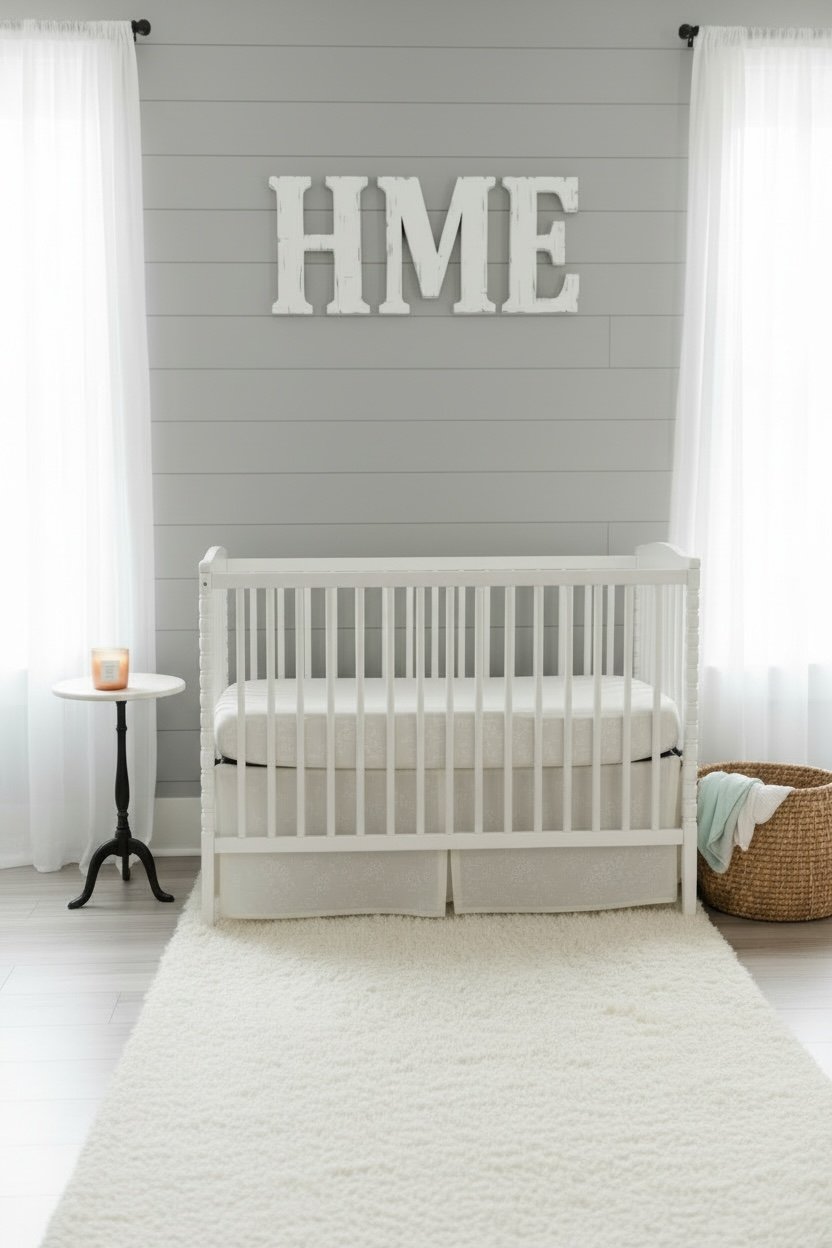
White script painted wood letters create elegance and sophistication. These connected letters feel like a permanent statement without the visual weight of multiple pieces competing for attention. They work above the crib, on a feature wall, or as part of a gallery arrangement.

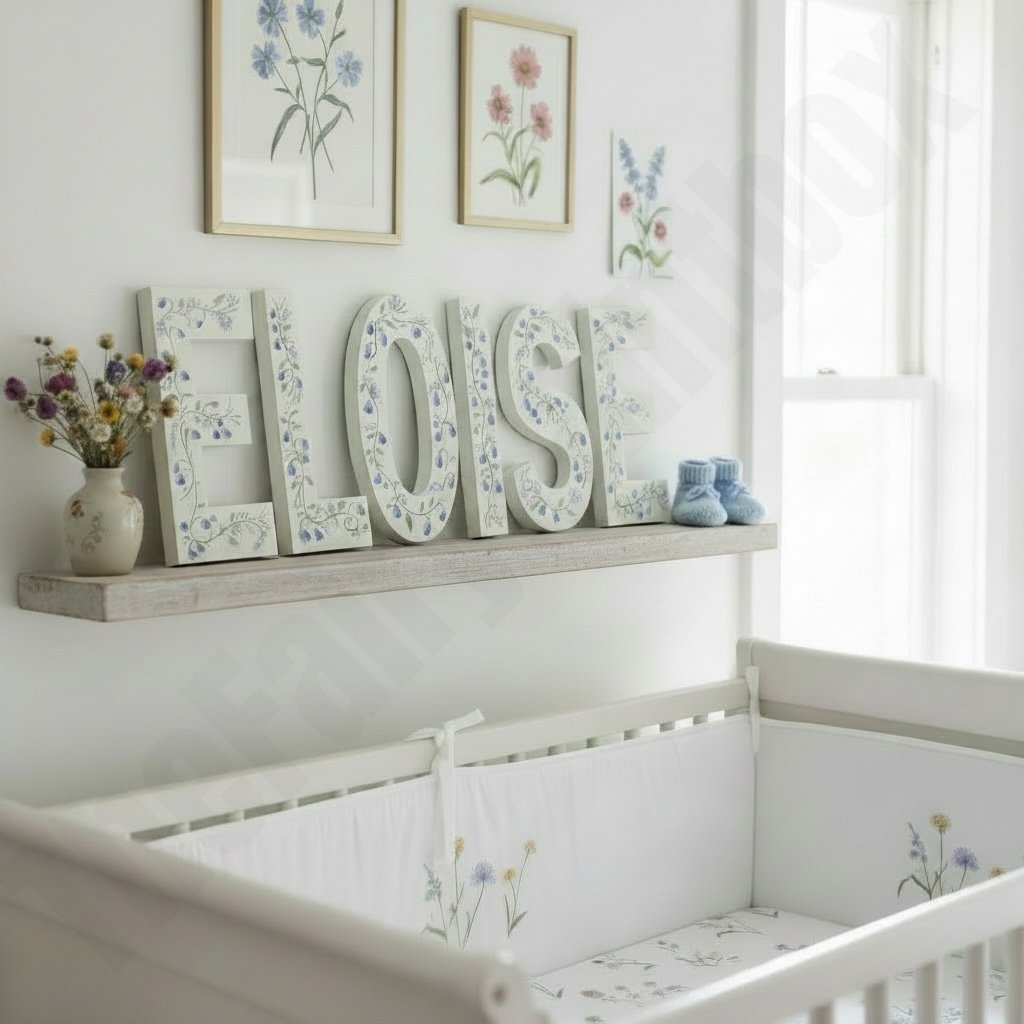
White wildflower painted letters strike a balance between whimsical and refined. The hand-painted botanical details add personality, but the white background keeps the overall feeling calm. This approach works for parents who want character without chaos.
Constellations painted on wooden letters bring celestial wonder into the space. Each letter features intricate constellation designs with sparkling crystal accents. It's personalized, meaningful, and creates a focal point that actually engages a child's imagination as they grow.
The real difference between cluttered and curated comes down to this: choose one strong personalized piece and let it breathe. Resist the urge to fill every wall. Empty space is part of the design.
Small Nursery Design Ideas That Feel Spacious
Small nurseries fail for one of two reasons: too much furniture on the floor, or decor that pulls the eye down. The fix is a sequence, not a shopping list. Measure the room first, then decide what has to live on the floor, then let everything else go vertical or disappear.
Start with circulation, not decor. A common pattern among parents who feel cramped is a crib, glider, and dresser arranged against three walls with a walkway of less than two feet.
Stained Wood Wall Nursery Room Letters - Natural →
Use vertical zones deliberately. Wall-mounted shelving above the changing table, a single high shelf for out-of-reach items, and personalized letters or a crescent moon sign above the crib draw the eye up and free the floor.
Choose furniture with visual and physical lightness. A crib with simple spindles, a dresser on short legs, and open baskets that slide under the crib rail all read as less mass than solid boxy pieces. Avoid tall freestanding bookcases in small nurseries, they crowd the room and create a tipping risk once a toddler starts pulling up.
Layer light instead of adding lamps. One overhead fixture plus a dimmable nightlight near the feeding chair covers most needs without eating surface area. Soft, warm light also makes small rooms read larger than harsh overhead light does.
Use reflection carefully. Mirrors are generally avoided in nurseries for safety reasons, but a pale, slightly reflective finish on a wooden sign or a light-colored wall behind the crib bounces daylight and subtly expands the room. Keep anything reflective or glass out of reach of the crib.
Decor That Grows With Your Child
The best nursery decor doesn't need a complete overhaul at age three or five. Pieces designed to grow with your child eliminate waste and create continuity in their space.
Natural wood elements age beautifully. A sage green wooden name sign or natural oak stained letters look equally at home in a newborn's nursery and a five-year-old's room. The aesthetic doesn't scream "baby", it whispers "this is your space."
Celestial themes have remarkable longevity. A crescent moon wooden sign or constellation-painted letters appeal to toddlers discovering the night sky and to older children learning about astronomy. The piece doesn't need replacing; the meaning just deepens.
A tree ring heart wooden sign symbolizes growth, strength, and love. These aren't novelty items that lose relevance. They're keepsakes that gain meaning over time. Your child will remember the piece that hung above their crib, and it will still look beautiful in their room years later.
The layered monogram approach offers flexibility. As your child grows, you can add to the arrangement, change the display, or repurpose the pieces. The handcrafted quality means they hold up to the wear of a growing child's room.
Creating a Functional, Beautiful Space
Most nursery guides stop at "make it pretty and practical." The gap they miss is safety-first function: the room has to work for a sleepy caregiver at night and stay safe as a baby becomes a crawler, a puller-upper, and a climber. Style decisions should follow those two constraints, not the other way around.
Anchor anything that can tip. Dressers, shelving units, and bookcases should be secured to wall studs with anti-tip straps, this is standard guidance from child-safety organizations and the single most important functional choice in the room (AnchorIt.gov).
Place wall decor with reach in mind. Anything hung above the crib or changing table should be lightweight, firmly mounted into a stud or anchor, and out of a standing toddler's reach. Heavy frames, glass, and shelving directly over the crib are common mistakes; move them to a side wall or higher up.
Design the night workflow. The changing area needs soft, dim light and supplies within arm's reach so you're not fumbling in the dark. The feeding or soothing chair needs a small side surface for water, a burp cloth, and a nightlight, plus a clear path to the door.
Make storage visible and reachable. Open baskets for blankets, labeled bins for supplies, and a hamper that's easy to tote all keep the room functional without hiding everything. Keep the most-used items at waist height and reserve high shelves for out-of-reach backups.
Choose textiles for washability and breathability. A quality rug, soft blankets, and breathable bedding add comfort while keeping the clean aesthetic. Favor materials that can be washed hot and that off-gas less, many parents now look for low-emission finishes and durable, washable fabrics, which also last longer as the child grows.
Let one piece do developmental work. A felt baby mobile or an outer-space-themed mobile above the crib adds visual interest and supports curiosity without cluttering the room. Keep mobiles securely mounted and remove them once a baby can push up or reach.
Frequently Asked Questions
How do you decorate a modern nursery without it looking too minimal or cold?
Modern nursery decor balances clean lines and neutral tones with warmth through texture and personalization. Add soft rugs, gentle lighting, and one or two meaningful focal points like personalized wall art. The key is choosing pieces that feel intentional rather than filling the space. Handcrafted elements like custom wooden letters add character while maintaining a contemporary aesthetic.
What are the best gender-neutral nursery decor ideas for a contemporary space?
Gender-neutral modern nurseries work well with sage green, warm grays, soft whites, and natural wood tones. Layer in textures through soft rugs and blankets, then add personality with a single statement piece like a celestial mobile or nature-inspired wall art. Avoid busy patterns; instead, let a personalized name sign or botanical accent become the room's focal point.
Can personalized nursery wall art work in a minimalist room, or will it look cluttered?
Personalized wall art fits beautifully in minimalist nurseries when you follow the rule of one strong focal point. A single custom name sign or nature-themed wooden piece draws the eye without overwhelming the space. The handcrafted quality and intentional placement make it feel like a deliberate design choice rather than clutter. Customers report this approach creates a room that feels both personal and serene.
How do you make a small nursery feel more functional and spacious?
In small nurseries, vertical space is your friend. Mount wall art and name signs above the crib or changing table to draw the eye upward. Choose furniture with storage, use a single accent wall in a soft neutral, and keep the floor clear. Handcrafted wooden letters and simple wall decor add personality without taking up floor space, making the room feel intentional rather than cramped.