


Last Updated: November 4, 2026
Quick Summary
Effective nursery sign placement in a small room means giving each wall one job: hang the name sign centered above the cot rail, use the narrow wall beside the door for a slim vertical piece, and rest a lightweight sign on a book ledge. Keep signs off the cot zone and changing area for safety.
- Map the room in zones first, since most small nurseries have only two usable walls.
- Trace sightlines from the doorway and feeding chair to find the best sign wall.
- Never hang a sign directly over the mattress or the changing pad.
- Size the sign to its wall and leave a hand's width of clear wall on each side.
- Use adhesive strips for light signs on smooth walls if you rent and cannot drill.
Table of Contents
- Why Nursery Sign Placement Decides How Big a Small Room Feels
- Small Nursery Layout Ideas That Free Up Wall Space First
- 1. Hang the Name Sign Above the Cot, Not Above the Baby
- 2. Use the Narrow Wall Beside the Door
- 3. Turn a Book Ledge Into a Sign Shelf
- 4. Claim the Space Behind the Door
- How to Hang Nursery Signs Safely in a Compact Room
- 5. Scale Signs to the Wall, Not to the Room
- Frequently Asked Questions
Why Nursery Sign Placement Decides How Big a Small Room Feels
A nursery sign placement in a small room is not just decoration. It is a design decision that changes how the whole space reads.
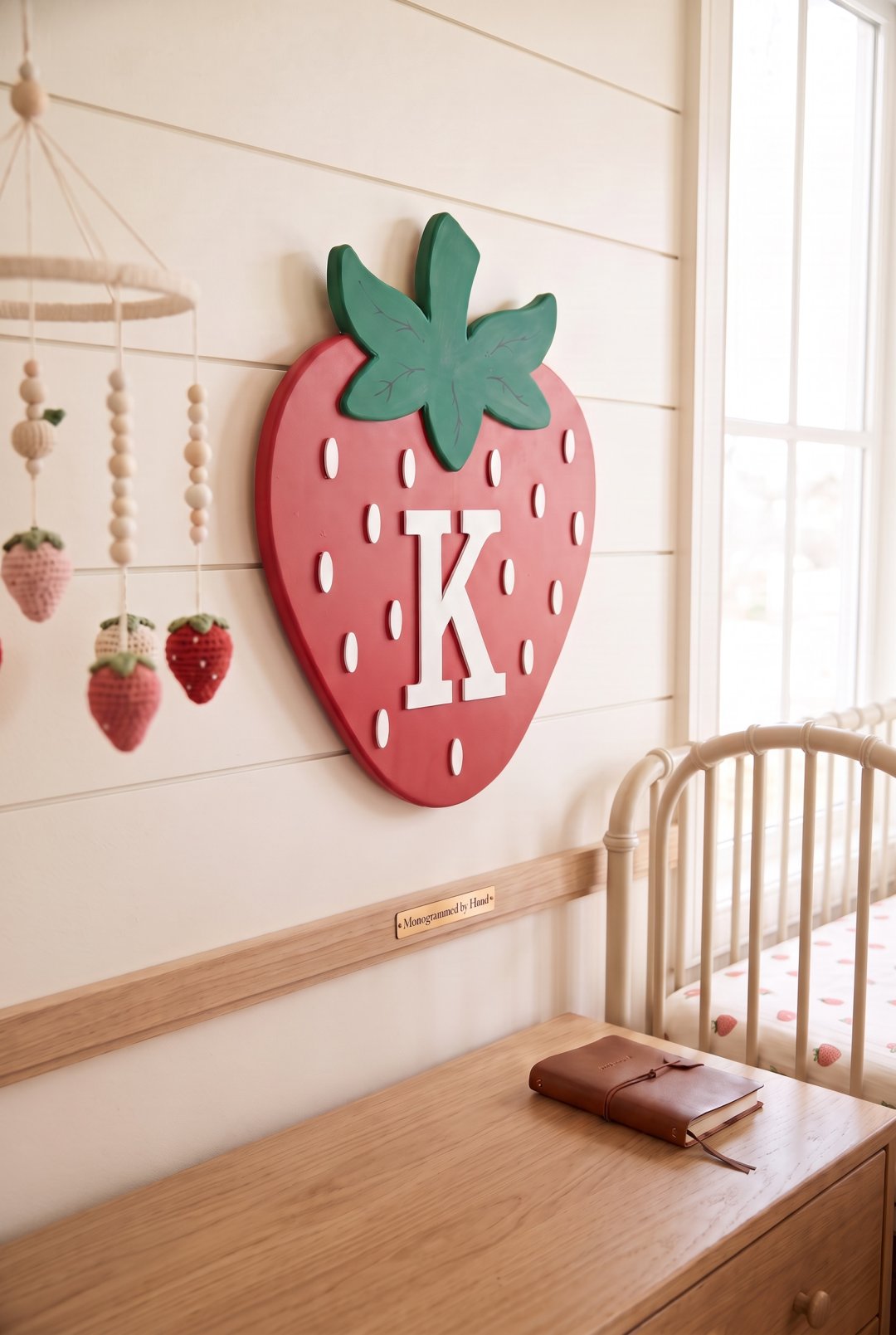
The pattern is clear. Small rooms do not suffer from too little wall space. They suffer from signs and art scattered across every surface at once.
Below, we will show you exactly where a nursery sign belongs in a compact room, plus four placements most parents never try. The ideas have one goal: make your baby's room feel bigger, safer, and more personal.
Small Nursery Layout Ideas That Free Up Wall Space First
Small nursery layout ideas work best when you plan the room in zones before you buy a single piece of decor. A sign needs a clear wall to shine. If the cot, dresser, and changing table already crowd every surface, no sign will fix the clutter.
Map the Room Before You Hang Anything
Walk into the room and list every wall. Note the door, the window, the cot, and the dresser. Then mark which walls are truly free. Most small rooms have only two usable walls. That is normal. The trick is to give each wall one job:
- Cot wall: one large sign or a simple gallery
- Door wall: a slim sign or nothing at all
- Dresser wall: a shelf with a resting sign
One job per wall stops the room from feeling busy. But the mapping step is where most parents stop, and that is why signs end up in the wrong spot. The next step is to trace sightlines from the places you actually stand in the room.
Trace Sightlines From the Door, the Cot, and the Chair
Stand in the doorway. What do you see first? That sightline should land on your sign, not on a cluttered shelf or a bare wall. Then sit in the feeding chair or rocker.
In compact rooms, the wall you see from the door is often also the wall behind the cot. When that happens, put the sign on the cot wall and keep everything else off it.
Zones That Keep the Cot Wall Clear
The cot wall is the wall you see first. Keep it calm. A single name sign above the cot does more than five small frames ever could. Move storage away from this wall.
Watch out: if the cot wall also holds the only window, do not hang a sign between the cot and the glass. The light will silhouette the sign and make it hard to read, and the curtain hardware leaves little room for safe mounting.
Give the Changing Area Its Own Wall
The changing table is the busiest surface in a small nursery. It collects wipes, creams, and laundry within a week. Do not add a sign above it unless the wall is genuinely free. A sign above a changing pad is also a safety problem because you will reach over the pad to adjust it. Instead, give the changing area a low shelf or a basket on the wall, and save the sign for a wall you pass by rather than a wall you work at.
Plan for the Door Swing
Before you commit to a sign on the narrow wall beside the door, open the door fully. A door that swings back against the wall will hit anything mounted there. Measure the gap between the open door and the wall. If the gap is tight, move the sign higher than the door handle or choose the wall behind the door instead.
1. Hang the Name Sign Above the Cot, Not Above the Baby
The best spot for a name sign is the wall above the cot, centered on the cot itself, high enough that a standing adult can see it but a toddler cannot reach it.
Watch out: never hang a sign directly over the spot where your baby's head rests. Wood can fall. Keep the sign on the wall above the cot rail, not over the sleeping area.
A wooden name sign works well here because it is light and easy to center. If you want a ready-made option sized for this exact spot, our moon and star painted letters are built to sit above a cot.
2. Use the Narrow Wall Beside the Door
Narrow walls beside a door are the most wasted space in a small nursery.
This spot suits letters stacked in a column or a tall, thin name sign. Keep the piece narrow so it does not crowd the doorway.
Our green wooden wall letters are a good match. They hang flat and fit tight walls where a wide sign would not.

3. Turn a Book Ledge Into a Sign Shelf
A book ledge does two jobs at once. It holds a few board books and gives your sign a place to rest. This is the smartest move for a room with no free wall left.
Set the ledge at a height you can reach. Lean a lightweight wooden sign against the wall on top.
This keeps the sign off the floor and out of the cot. It also lets you swap the sign later without new holes in the wall.
Cloud-Shaped Baby Name Wood Nursery Room Sign →
For a ledge display, our wooden name letters are light enough to rest or hang.

4. Claim the Space Behind the Door
The wall behind an open door is hidden space. In a small room, hidden space is gold. A compact sign here adds charm without taking up any visible wall.
Choose a single-piece sign that fits the shallow gap. A cloud or round shape works well because it reads as one clean piece.
Our cloud-shaped name sign can suit this spot, as it is a single piece.

How to Hang Nursery Signs Safely in a Compact Room
Hanging a nursery sign safely means three things: a secure fixing, the right height, and a spot away from the cot and changing area. Get these right and the sign stays put for years. In a small room, safety and scale are linked, because a sign that is too large for its wall is also more likely to be knocked or reached for.
Follow these steps:
- Check the wall type. Drywall, plaster, and brick need different fixings.
- Use the hardware included. Our signs come with hanging hardware on the back.
- Keep signs out of reach. Mount them higher than a toddler can stretch.
- Avoid the cot and changing area. No sign directly over the mattress or the changing pad.
- Test the hold. Give the sign a gentle pull before you walk away.
Match the Fixing to the Wall Surface
Drywall is the most common nursery wall and the easiest to damage. A lightweight wooden sign under about two pounds will usually hold on a single nail or a small picture hook, but a sign with any weight to it needs a hollow-wall anchor. Plaster walls are older and more brittle. Drill slowly and use a anchor designed for plaster, or the surface will crumble around the hole.
Mounting Methods for Renters and Awkward Walls
Renters need holes-free options. Adhesive strips work for light wooden signs on smooth, painted walls. Clean the wall first, press firmly, and wait before hanging. Do not use adhesive strips on wallpaper, fresh paint, or textured plaster because the strip will take the surface with it when removed. For doors, an over-the-door hook is a holes-free option that suits a lightweight sign, but check that the door still closes without the sign rubbing the frame.
Size the Sign to the Wall, Not the Room
Sign size should match the wall it hangs on, not the size of the room. A big sign on a small wall looks cramped. A tiny sign on a wide wall looks lost.
Watch out: do not size a sign to the full width of the wall. Leave at least a hand's width of clear wall on each side so the sign reads as a piece of decor rather than a mural.
Balance the Sign Against Existing Art and Shelves
A sign competes with everything else on the wall. If you already have a gallery or a shelf, group the sign with it rather than hanging it alone on a separate wall. Leave about two to three inches between the sign and the nearest frame so the group reads as one arrangement. Keep the sign at the same visual weight as the pieces around it.
Keep Decor Out of the Cot Zone
The safest rule in a small nursery is that nothing hangs directly above the mattress. Mount the sign on the wall above the cot rail, not over the sleeping area, and check that the bottom edge is higher than a standing adult's shoulder so a toddler cannot reach it from the cot.
Our round spaceship and moon sign is a good pick for a compact wall. It is easy to secure and reads as one solid piece.
5. Scale Signs to the Wall, Not to the Room
Sign size should match the wall it hangs on, not the size of the room. A big sign on a small wall looks cramped.
Use this simple guide:
| Wall Width | Sign Style | Why It Works |
|---|---|---|
| Narrow beside door | Tall, slim letters | Fits tight space |
| Above cot | One centered name sign | Clear focal point |
| Above dresser | Small sign on a ledge | Adds charm, saves wall |
| Behind door | Single compact piece | Fills hidden space |
Match the sign to the wall and the room feels balanced.
One more thing most guides miss: a sign does not have to sit above the cot. The narrow wall, the ledge, and the space behind the door are all fair game.
Frequently Asked Questions
How do you hang a nursery sign in a small room without making it look crowded?
Pick one wall as the feature wall and keep every other wall quiet. A single personalised sign, such as a cloud-shaped name sign, carries more impact in a compact room than three or four smaller pieces competing for attention. Leave clear wall space around the sign so it can breathe, and keep shelves and ledges below it free of tall objects that crowd the sightline. If the room already has a patterned rug or busy bedding, choose a simpler sign shape and a calm paint colour so the decor does not fight itself.
What is the best height for a baby name sign above a cot?
Hang the sign high enough that a standing adult can see it clearly but a child cannot reach it from inside the cot, and never directly over the sleeping area where it could fall. A practical approach is to mount it on the wall at the cot's head end or slightly offset, well above the top rail, then check the fixing by hand. Use the hanging hardware that comes attached to the back of the sign, and fix into a stud or use an appropriate wall anchor for the wall type. Recheck the fixing a week after hanging.
Can you put wall decor in a very small nursery?
Yes, and it often helps. A small room with bare walls can feel like a box, while one well-placed sign gives the eye somewhere to land and makes the space feel intentional. The rule is quality over quantity: choose one handcrafted piece with real texture or hand-painted detail rather than a cluster of flat prints. Vertical placement matters too, since using height draws the eye upward and makes a narrow room feel taller. Keep the rest of the wall clear and let the sign do the work.
How do I balance a personalised name sign with limited wall space?
Treat the sign as the anchor and build nothing else around it. Measure the wall section first, then choose a sign size that leaves visible space on both sides rather than stretching edge to edge. If you want a gallery wall, keep it to three pieces maximum and align them to the sign's centre line. For renters or awkward surfaces, hanging hardware on the back of the sign plus a removable hook keeps damage minimal. Order custom pieces early, since hand-painted signs are made to order and take a few weeks.
Your small nursery can feel big, personal, and calm. It starts with one well-placed sign. At Painted wood letters, we handcraft each piece with painted wood letters, custom name signs, and themes that suit both boho and modern rooms. Every sign comes with hanging hardware and free preliminary sketches so you can see the design before we paint it. Get started with Painted wood letters and turn your baby's small room into a space they will love for years.
