

Last Updated: November 26, 2026
Quick Summary
Choose one dominant flower color to set the mood, add a supporting tone from the same family, and pair both with a neutral wall base so the flowers can breathe. These flower color ideas work best when you pick blooms first and pull your wall, fabric and wood tones from that same palette.
- Soft blush, rose and peach flower tones create a warm, soothing baby girl nursery that reads elegant rather than sugary.
- Lavender, lilac and sage green give a calm botanical feel, with sage on walls and lavender kept for the flowers.
- Daisy white anchors a playful wall, letting hot pink, sunny yellow and lavender brights act as accents.
- In small rooms, build the flower display on one wall, usually behind the crib, and keep other walls quiet.
- Match your name sign to the flower palette you already chose, not the other way around.
Table of Contents
- Why Flower Color Sets the Mood of a Nursery
- Nursery Color Palette Ideas That Start With the Flowers
- Blush, Rose, and Peach: Soft Pink Flower Palettes
- Lavender, Lilac, and Sage: Cool Botanical Palettes
- White, Daisy, and Retro Brights for a Playful Wall
- Nursery Flower Wall Ideas for Small Rooms and Tight Budgets
- How to Hang Paper Flowers on a Wall So They Stay Put
- Choosing Your Flower Palette and Name Sign
- Frequently Asked Questions
Why Flower Color Sets the Mood of a Nursery
The flower color ideas on your nursery wall do more work than almost any other choice in the room. They set the mood before your baby can focus on anything else, and they decide whether the space feels calm or busy the moment you walk in.
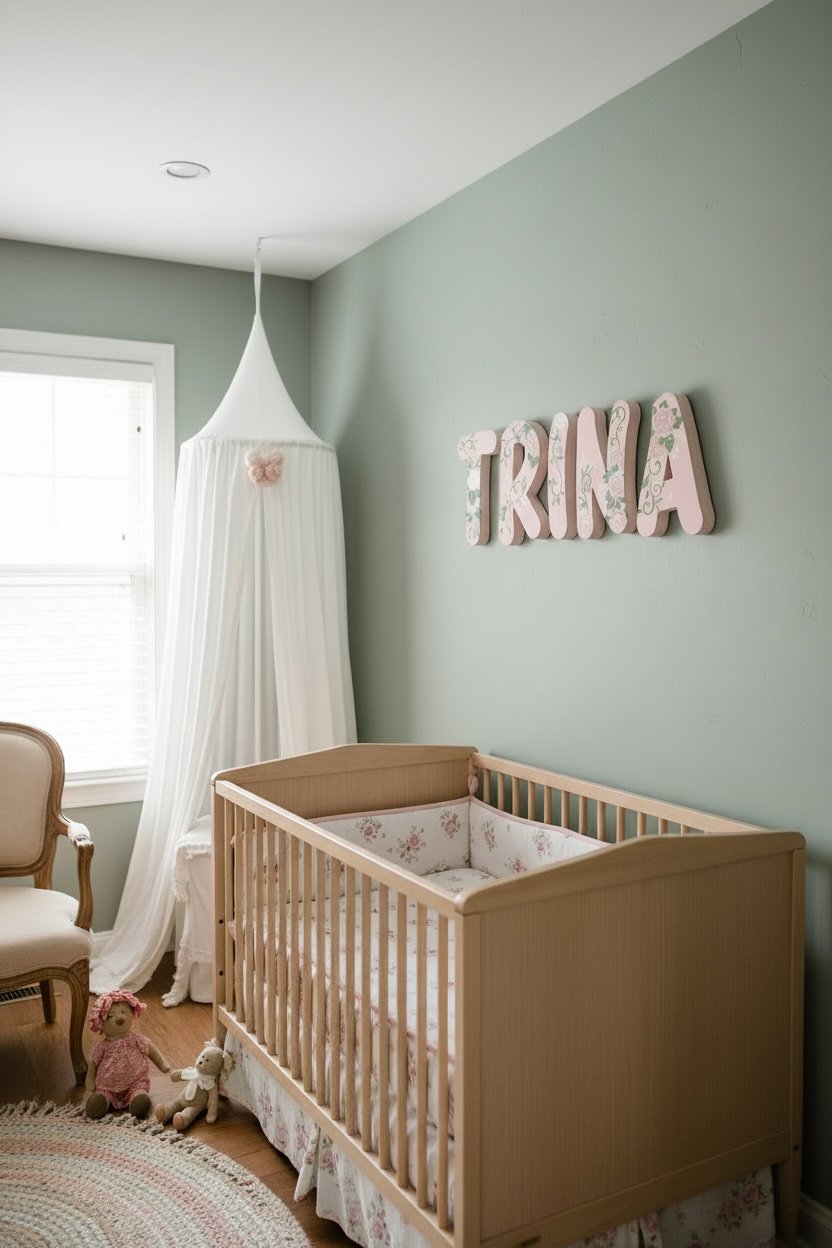
At TheFairyPaintBox, we hear the same worry from expecting parents again and again: they love floral nursery decor but fear it will tip into clutter. The fix is not fewer flowers. It is a tighter flower color palette.
A floral baby room works because color carries emotion. Soft blush and peach settle a room down. Sage green and lavender cool it. Daisy white and bright retro tones wake it up.
That is the throughline for everything below. Choose the flower color mood first, then build the room around it.
Nursery Color Palette Ideas That Start With the Flowers
Color palette ideas for a nursery work best when you start from the flowers rather than from the paint chip. Pick the bloom colors you love, then pull your wall, fabric and wood tones from that same family.
The most common mistake is choosing wall paint first and hunting for flowers to match. That usually ends in a mismatched, over-themed look. Reverse it.
Here is how we would sequence a nursery palette:
- Choose one dominant flower color that sets the mood.
- Add one supporting flower tone from the same family.
- Pick a neutral wall base to let the flowers breathe.
- Add one small accent color for contrast.
- Repeat the flower colors in three places: wall art, bedding and a name sign.
Pottery Barn Kids recommends pairing a neutral base tone with bright pops of a bolder color, which is a reliable way to keep a flower wall from overwhelming the room (Pottery Barn Kids nursery wall decor guide). That single rule, neutral base plus flower accents, prevents most nursery color mistakes.
Blush, Rose, and Peach: Soft Pink Flower Palettes
Soft pink flower palettes are the classic choice for a baby girl nursery, and for good reason. Blush, rose and peach flower tones create a warm, soothing environment that reads as elegant rather than sugary.
The trick is layering your pinks instead of using one flat shade. Combine a pale blush pink with a deeper rose and a hint of peach, and the wall gains depth.
A few ways to build a pink flower palette that lasts:
- Use blush pink as the dominant flower color and rose as the supporting tone.
- Add a small amount of rose gold or warm metallic in a frame or letter for a little sparkle.
- Keep the wall base soft and light so the pink flowers stay the focus.
- Repeat the pink in bedding, a wreath print and painted letters so the room feels harmonious.
If pink is your direction, our guide on how to style pink floral nursery wall letters for baby girls shows how the letters actually look once they are on the wall. Seeing the styling in place makes the palette decision much easier.
Lavender, Lilac, and Sage: Cool Botanical Palettes
Cool botanical palettes built on lavender, lilac and sage green give a nursery a calm, garden-like feel. These tones suit parents who want floral decor without the traditional pink.
Lavender and lilac read as gentle and slightly grown-up, while sage green grounds the room and keeps it from feeling sweet. Together they create a botanical baby room that feels peaceful rather than busy. Happiest Baby points to neutral, muted tones as a cozy and calm option for a flower-themed baby room, and sage sits comfortably in that family (Happiest Baby floral nursery ideas).
To build this palette well:
- Let sage green carry the walls or a large piece, and keep lavender for the flowers.
- Add purple flowers in small doses so the room stays calm, not heavy.
- Bring in natural textures, like preserved moss or woven baskets, to echo the botanical theme.
- Use white as a quiet bridge between the green and purple.
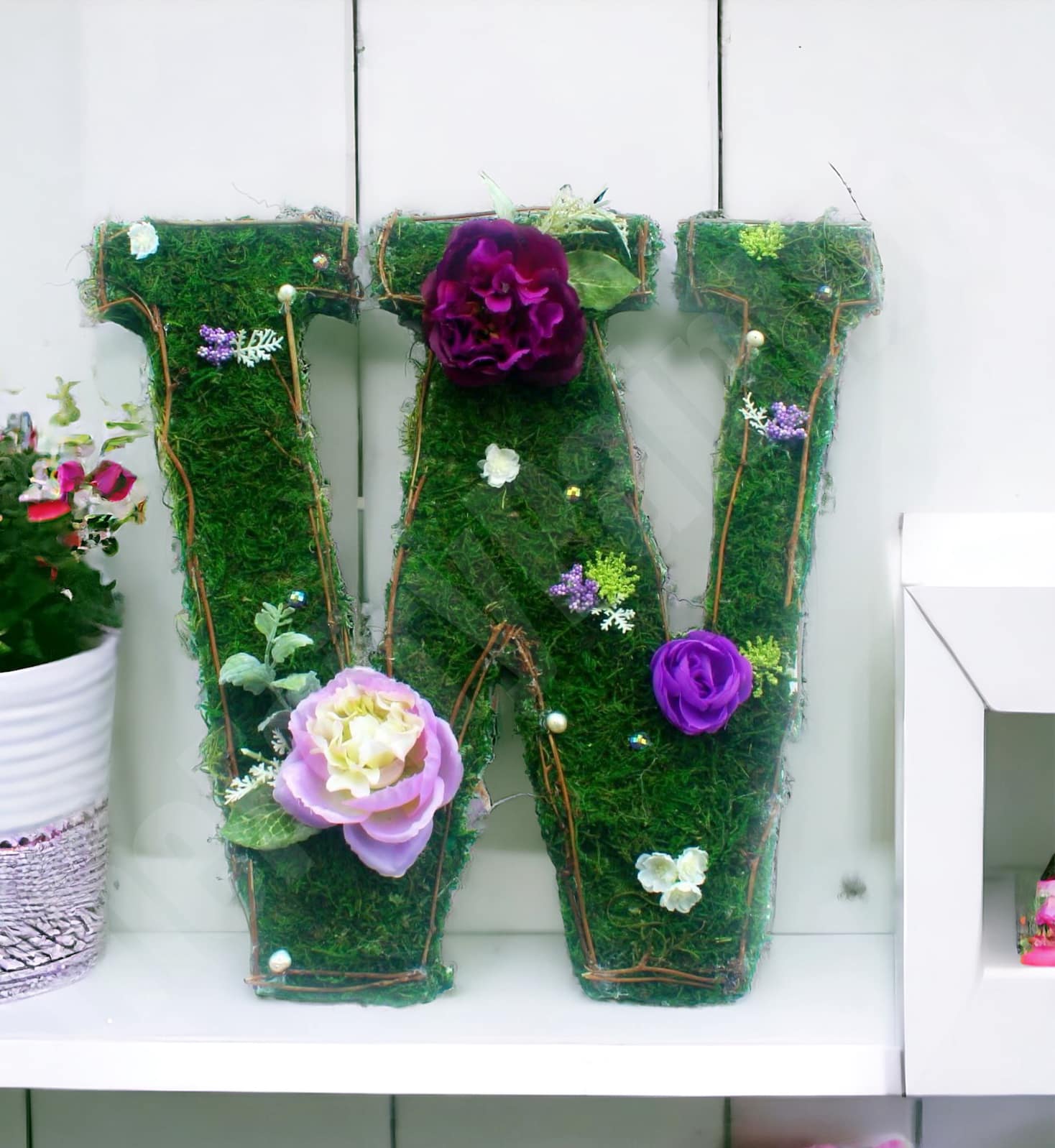
The purple botanical moss letter set in our collection is a natural fit for this palette, pairing soft lavender with moss and pale pink buds. If you are choosing cool tones, it helps to see the purple botanical moss baby room wall letters alongside your paint and fabric samples.
White, Daisy, and Retro Brights for a Playful Wall
White flowers and retro brights turn a nursery wall into something playful and full of life. This palette suits a baby room that should feel cheerful and imaginative rather than calm.
Daisy white is the anchor here. It gives the eye a rest between brighter petals, and it keeps a bold flower wall from feeling chaotic. Then you layer in the fun: hot pink, sunny yellow, lavender and a touch of orange, drawn from 60s and 70s floral art.
A few practical ways to keep a bright flower wall working:
- Use white flowers as the base and let the brights act as accents.
- Repeat one bright color three times across the wall so the eye has a pattern to follow.
- Keep the wall paint simple so the flowers carry the color.
- Group small flower pieces together rather than scattering them.
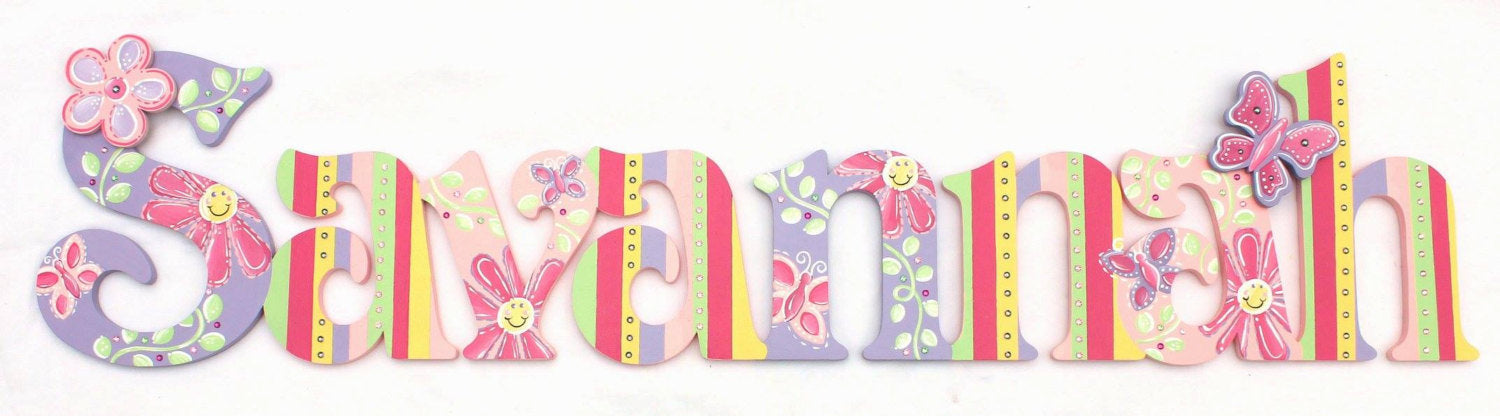
Our smiling daisy painted letters in hot pink and lavender bring exactly this playful look to a wall, and a reader leaning toward daisies will enjoy seeing the daisy and bright floral letter option in the context of the room.
Nursery Flower Wall Ideas for Small Rooms and Tight Budgets
Small rooms benefit from restraint. Choose a single wall, usually the one behind the crib, and build your flower display there.
Feature wall with paint or wallpaper. A single painted or wallpapered wall gives the strongest focal point and the most finished look.
Peel-and-stick floral decals. Decals are the lowest-effort option and the easiest to reposition or remove.
Framed floral prints. A gallery of framed botanical or floral prints adds color without touching the wall surface.
Painted floral motifs. Hand-painted flowers or a stenciled motif give a custom, mural-like feel without full-wall coverage.
Whichever route you choose, start with a few larger flowers instead of many small ones, which reads as more deliberate. Our guide on nursery sign placement ideas for small rooms covers where to put signs and wall pieces so a flower display adds interest without crowding the space.
Here are the four common flower wall approaches side by side, so you can weigh effort and commitment before you start.
| Approach | Best for | Key difference |
|---|---|---|
| Feature wall with paint or wallpaper | Strongest focal point and finished look | Most commitment; color test at morning, midday, evening |
| Peel-and-stick floral decals | Renters and small rooms | Lowest effort; easiest to reposition or remove |
| Framed floral prints | Most flexible option | Adds color without touching the wall surface |
| Painted floral motifs | One-of-a-kind, mural-like wall | Takes the most time and skill |
How to Hang Paper Flowers on a Wall So They Stay Put
Paper and foam flowers stay put when you attach them with the right hardware for their weight and keep them out of reach of the crib. Light flowers need gentle adhesive, while larger blooms need a physical anchor.
This is where most nursery flower walls go wrong. A beautiful arrangement that droops or falls within a week is a frustration, and a display that puts small or detachable pieces within a baby's reach is a real risk.
- Check the weight of each flower and match the hardware to it. Light paper flowers can use removable adhesive strips; larger foam or paper blooms need a small pin or hook rated for the weight, or the tie, pin, and velcro attachments that often come with foam roses.
- Keep every flower well above and away from the crib, out of your baby's reach. A common pattern is to place the display on the wall beside the crib or high above it rather than directly over the sleep area, so nothing can fall into the crib.
- Press adhesive firmly and let it set before adding the next flower. Adhesive strips hold best on clean, dry, painted walls; skip them on textured or freshly painted surfaces.
- Arrange from the center outward so the display stays balanced, and step back often to check the overall shape.
- Check attachments periodically as the room warms and cools, since temperature changes can loosen adhesive over time.
Watch out: hanging anything directly over the crib where a baby could reach or where it could fall is a real risk.
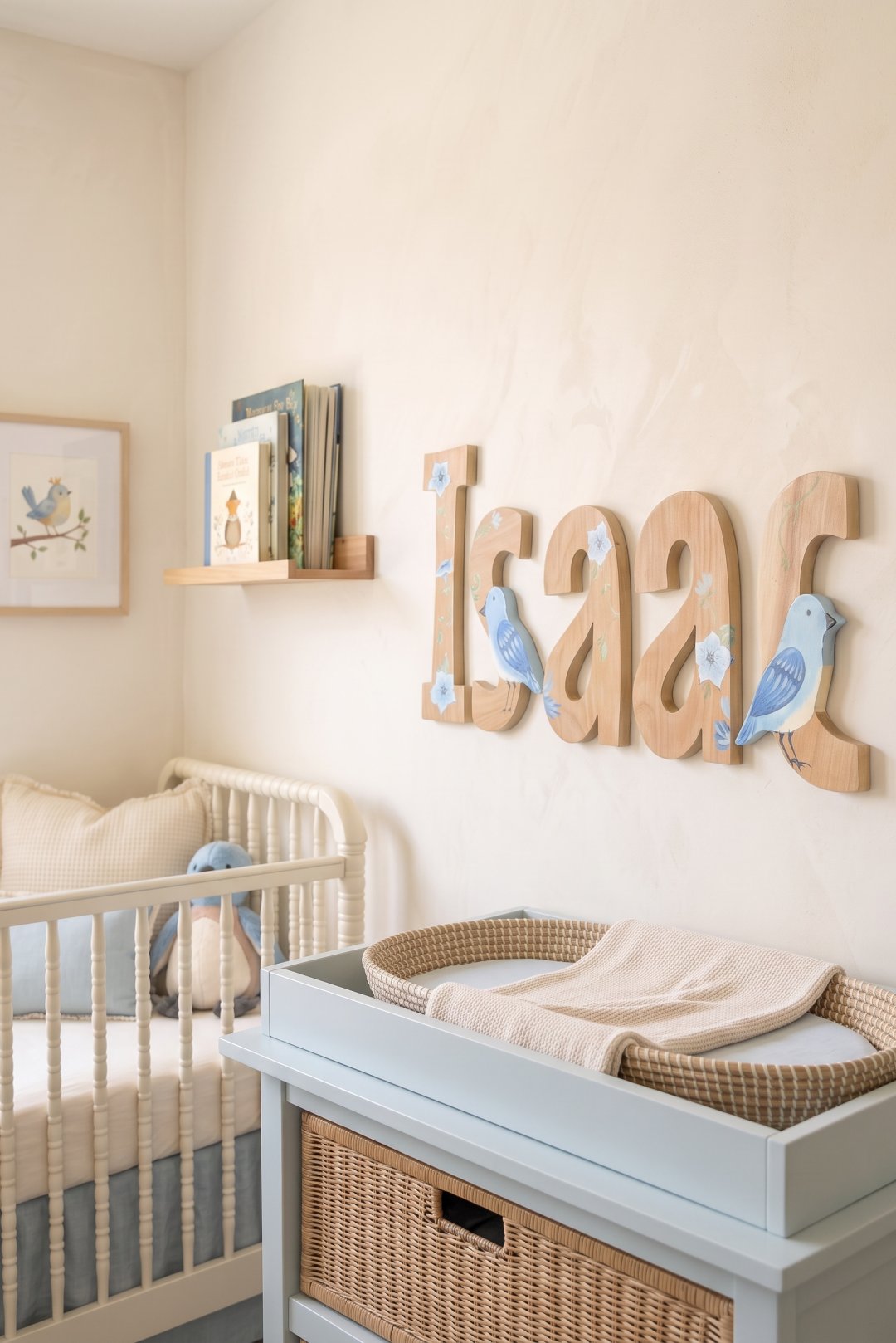
Choosing Your Flower Palette and Name Sign
Choosing your flower palette and name sign together is the step that makes a nursery feel finished.
This is the decision point where everything comes together. Once your palette is set, a personalized wood name sign becomes the centerpiece that pulls the room together.
If you are still comparing themes, browsing personalized nursery wall art sets across ten themes helps you see how a name sign fits a full room rather than standing alone.
Your nursery wall should feel like a calm, personal space, not a display you have to manage. The flower colors you choose set that tone, and the right name sign makes it yours.
At TheFairyPaintBox, we handcraft painted wood wall letters and personalized name signs designed to grow with your child, from the first floral nursery to a big-kid room.
Frequently Asked Questions
What flower colors work best on a nursery wall?
Blush pink, lavender, sage green, and soft white are the easiest starting points because they stay calm as a baby grows. Blush and peach warms a neutral room, while lavender and sage cool it down. If you want more energy, add a few brighter daisy yellows or retro reds as accents rather than covering the whole wall. Pick two or three flower colors and repeat them across art, letters, and textiles so the room feels harmonious instead of cluttered.
How do I choose a nursery color palette that feels calm?
Start with one neutral base for the wall, then choose two flower colors and one accent. A beige, taupe, or white wall lets blush roses or lavender stems stand out without overwhelming a small room. Keep the brightest color to about a tenth of the visible decor, such as a single daisy sign or a few pillow accents. Test paint swatches on the wall at different times of day, because morning and evening light change how pink and purple read in a nursery.
Can flower wall decor work in a small nursery?
Yes, and small rooms often benefit most from a single strong focal point. Choose one wall, usually behind the crib, and group your flowers there instead of spreading them around. Large foam roses or a few oversized paper blooms add depth without taking up floor space. Keep the rest of the walls simple, and use peel-and-stick wallpaper in one section rather than a full room so the space still feels open.
How do you attach paper flowers to a nursery wall without damage?
Lightweight paper flowers usually stay up with removable adhesive strips or putty, which suit painted walls and rented homes. For heavier foam or wood flowers, use the hanging hardware that comes attached, or small nails with wall anchors if the piece is large. Always check the weight limit on the adhesive and press it firmly for the full recommended time before hanging. Keep anything heavy out of reach above the crib and follow the product's installation instructions.
