


Last Updated: November 21, 2026
Quick Summary
Choosing wooden house numbers comes down to size, wood species, finish and mounting. Size digits to read clearly from the street, seal every face including edges and back, and match fasteners to your wall material and the weight of the piece.
- Four inch numbers suit porch posts, mailbox plaques and compact entries viewed up close.
- Six inch numbers are the dependable middle ground for most suburban homes and standard frontages.
- Eight inch numbers belong on large facades, long driveways and walls with real distance to the street.
- Coat every side of each number, since moisture creeps in from unprotected faces first.
Table of Contents
- Why Wooden House Numbers Are Worth the Extra Thought
- Choosing the Right Size: 4, 6 and 8 Inch Wooden House Numbers
- A Large Outdoor Wooden House Numbers Buying Guide for Bigger Facades
- Comparing Wood Types for Outdoor Use
- Finishes, Paint and Stain for Weather Resistance
- Mounting Wooden House Numbers Securely
- Legibility, Contrast and Nighttime Visibility
- Matching Numbers to Your Home's Style
- Frequently Asked Questions
Why Wooden House Numbers Are Worth the Extra Thought
Wooden house numbers are more than a practical marker for your address. They set the tone for your entryway before a guest ever reaches the door. At Painted wood letters, we spend our days shaping wood into letters and numbers, and we know how much a small detail like this can change a facade.
The case for wood is simple. It brings warmth and grain that metal and plastic can't match, and it ages with character rather than against it. That said, wood outdoors demands a little planning around species, finish, and mounting. Below, we walk through the decisions that matter most, from size and wood type to installation and upkeep.
Here's the part most guides skip: the number you choose has to survive sun, rain, and frost for years. Pick well now and you'll rarely think about it again.
Choosing the Right Size: 4, 6 and 8 Inch Wooden House Numbers
Size is the first decision, and it drives everything else. As a rule of thumb, size your numbers so they read clearly from the street, not just from your doorstep. A number that looks generous up close can vanish at the curb.
4 Inch Wooden House Numbers
Four inch wooden house numbers suit compact facades, porch posts, and mailbox plaques. They work best when the number sits close to the viewer, such as beside a front door or on a short driveway. If your home is set back from the road, four inch digits will likely strain the eye from a distance.
6 Inch Wooden House Numbers
Six inch wooden house numbers are the dependable middle ground for most homes. They read well from a typical sidewalk and give you room for a decorative font without losing clarity. For a standard suburban frontage, six inch digits are where we would start.
8 Inch Wooden House Numbers
Eight inch wooden house numbers belong on larger homes, long driveways, and facades with real distance to the street. The extra height keeps the address legible from a passing car and balances a wide wall that would swallow smaller digits.
| Number Height | Best For | Reads Well From |
|---|---|---|
| 4 inch | Porch posts, mailbox plaques, compact entries | Close range, a few steps away |
| 6 inch | Most suburban homes, standard frontages | Sidewalk and short driveway |
| 8 inch | Large facades, long driveways, big walls | Street and passing vehicles |
Best for: matching the number to your setback. Skip if: you're guessing, measure your viewing distance first.
A Large Outdoor Wooden House Numbers Buying Guide for Bigger Facades
A large outdoor wooden house numbers buying guide has to start with proportion. On a wide wall or a home set well back from the road, small digits get lost. Large numbers fill that space and do the practical job of announcing your address from a distance.
Two things matter most at this scale. First, thickness: a larger number needs enough body to avoid looking flimsy or warping over time. Second, mounting: bigger pieces carry more weight and catch more wind, so the fasteners must suit the material.
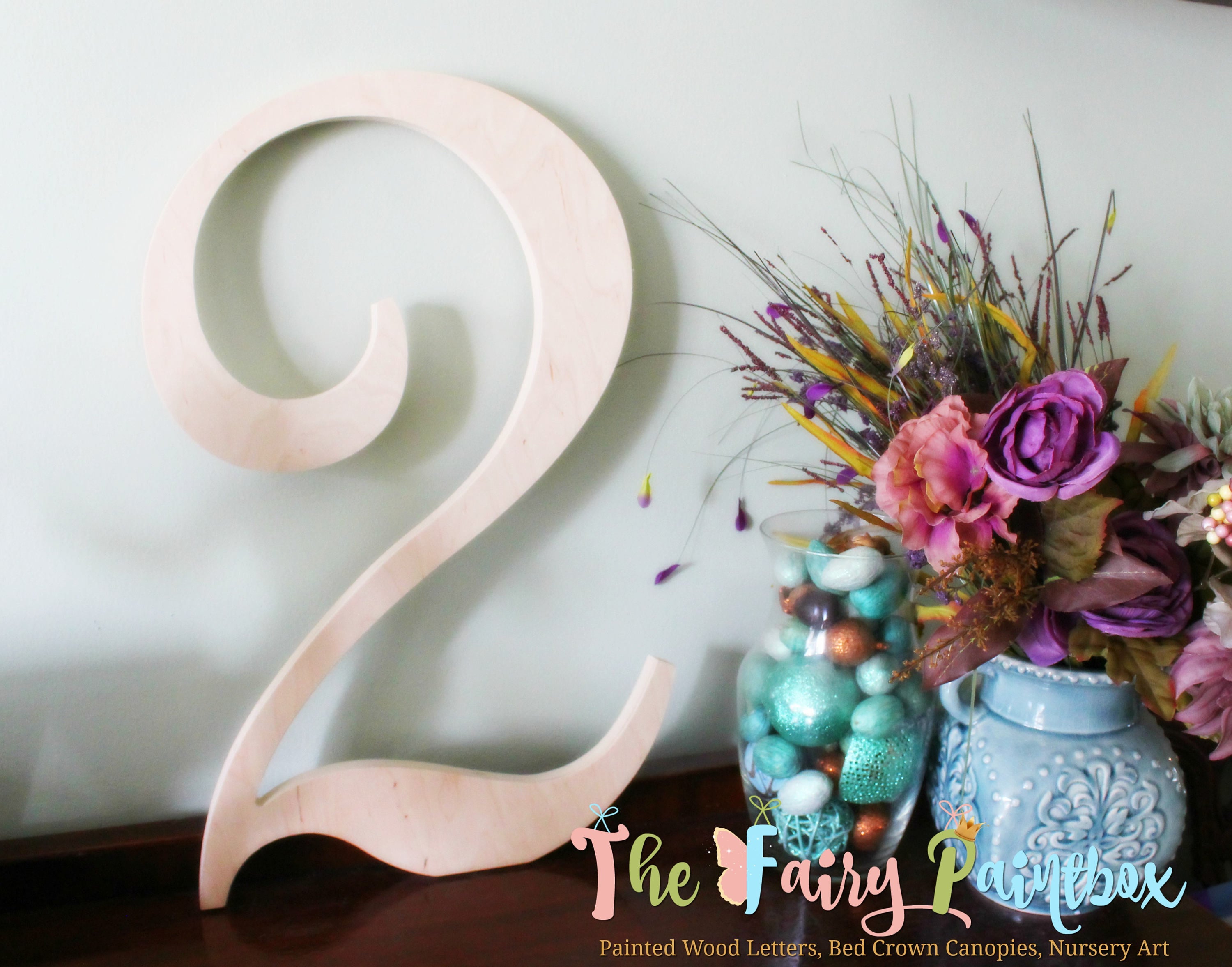
If you're sizing numbers for a grand facade, you can browse a large wood number in an unpainted finish and paint or stain it to match your trim. Ordering oversized pieces unfinished gives you full control over the final color.
Comparing Wood Types for Outdoor Use
Not all wood handles the outdoors the same way, and the species you choose shapes how long your numbers last. The useful question isn't just "which wood is best" but "which wood is best for my climate." Here is how the common options behave under real weather stress.
Cedar is a common choice for wet climates.
Finishes, Paint and Stain for Weather Resistance
Finish is what stands between your numbers and the weather. An unfinished surface will gray and soak up moisture, so plan on sealing, painting, or staining before installation.
Watch out: skipping the edges and back of each number is a common mistake. Moisture creeps in from unprotected faces first, so coat every side. If you plan to paint, our guide on protecting hand-painted wooden letters from scratches covers the finishing steps that keep color intact.
Mounting Wooden House Numbers Securely
Secure mounting keeps your numbers straight, safe, and readable for years. The right method depends on your wall material, the weight of the piece, and how you manage water. This is where most installations go wrong, so it pays to plan the details before you drill.
Fasteners. Small saw-tooth hangers or hanging adhesive are suitable for lightweight numbers.
Legibility, Contrast and Nighttime Visibility
A beautiful number that can't be read is a decoration, not an address. Legibility comes down to contrast, font choice, and lighting.
Matching Numbers to Your Home's Style
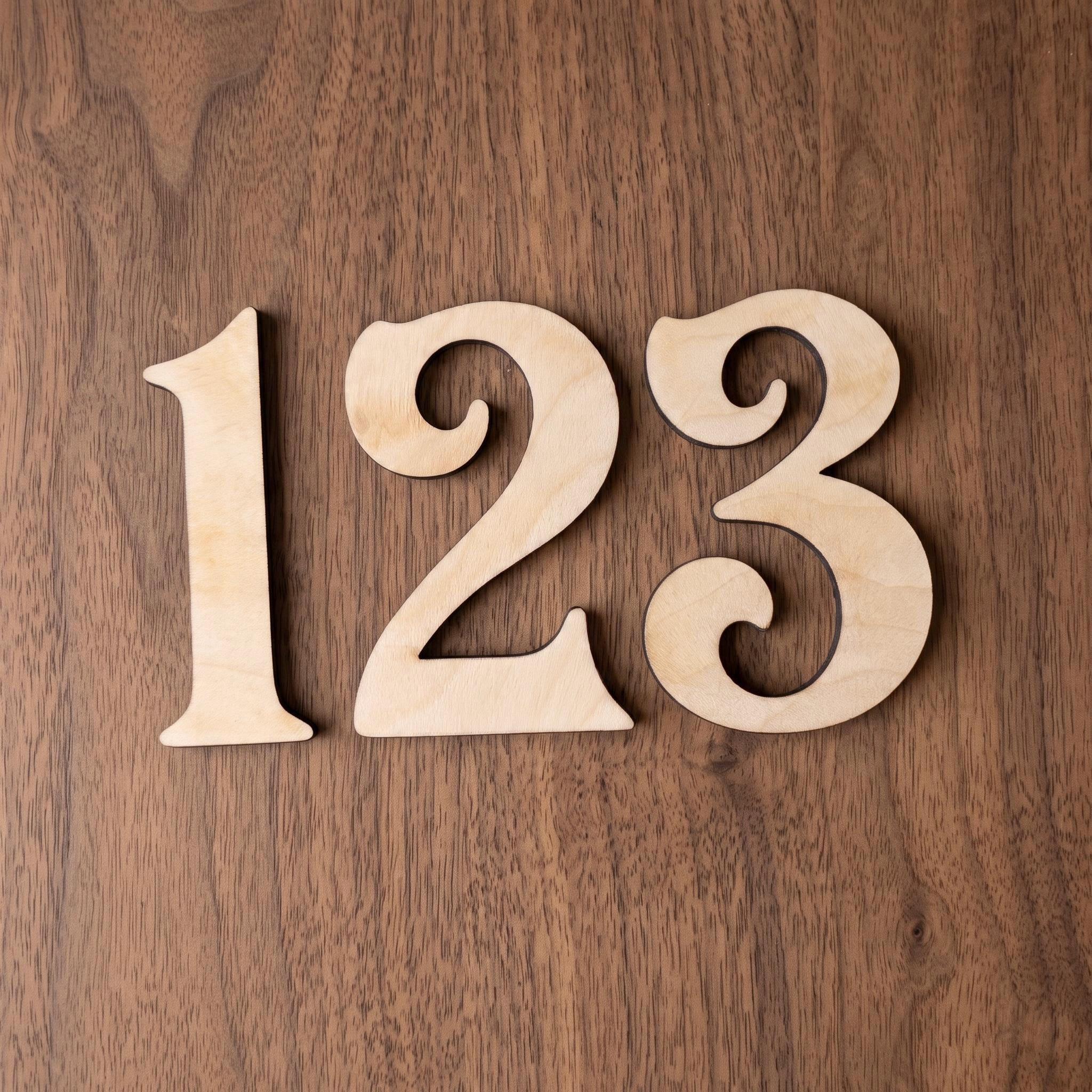
If you love a decorative touch, a fancy wooden sign number adds character to your entry.
Frequently Asked Questions
What is the best material for outdoor wooden house numbers?
Baltic birch numbers are available in our fancy Victorian font, with a smooth grain that suits painting or staining.
How do you protect wooden house numbers from weather?
Apply an exterior-grade finish and renew it as the surface starts to look dull. Paint gives the most colorfast protection, while stain and sealant preserve the grain. Check the numbers each season for hairline cracks or peeling, sand lightly and recoat before moisture gets into the wood. Mounting the numbers slightly off the wall with standoffs also helps air circulate and lets rain drain away instead of sitting against the back.
How should outdoor wooden house numbers be mounted?
Unpainted wooden numbers do not come with hanging hardware. Small saw-tooth hangers or hanging adhesive are recommended for mounting.
Are wooden house numbers easy to read from the street?
They are when the size, contrast and placement are right. Choose a number height that suits your viewing distance, place the numbers at eye level near the front door or on a street-facing wall, and pick a finish that contrasts with the background. A dark number on a light wall, or the reverse, reads more clearly than a low-contrast pairing. Adding a small light above the numbers keeps them legible after dark for visitors and emergency services.
